



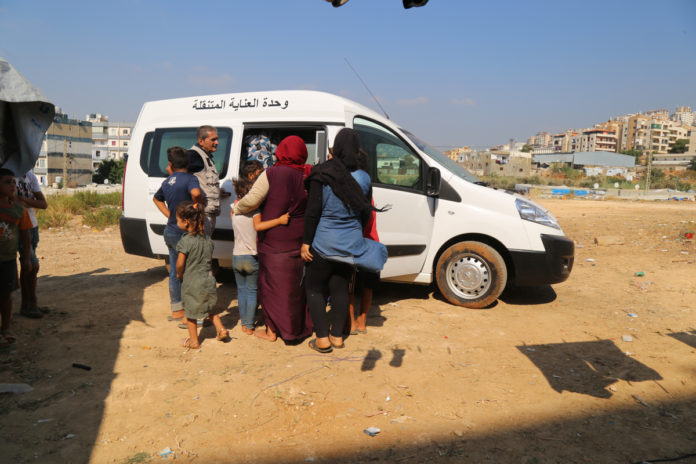
Lebanon is facing a deepening humanitarian emergency as hundreds of thousands of people flee escalating violence and insecurity in the country’s south. According to recent testimonies from the field, entire communities have been uprooted within days, leaving families searching for safety, shelter, and medical care in increasingly overcrowded conditions.
In an interview published by medico international, Dr. Zeina Mohanna, member of the board of Amel Association International, described the situation in stark terms. “With one word: catastrophic,” she said, explaining that within 72 hours, 53 villages and towns in southern Lebanon were forcibly displaced, leaving large areas south of Saida almost empty.
Across the country, around 670,000 people have been displaced, yet only a fraction have found space in formal shelters. Many families are scattered across host communities or forced to move north as insecurity spreads and Beirut itself struggles to absorb the influx of displaced people.
Dr. Mohanna warned that less than 10 percent of the current humanitarian needs are being met, a gap that could soon have severe consequences for public health. With colder weather, limited medical supplies, and overcrowded shelters, vulnerable groups including children, elderly people, pregnant women, and persons with disabilities face heightened risks. Without urgent assistance, the spread of infectious diseases becomes a real possibility.
Despite Lebanon’s ongoing economic and political crisis, the state response has shown limited improvement compared with previous emergencies. The Ministry of Public Health has attempted to coordinate with civil society organizations, but severe shortages persist, particularly mattresses, medications for chronic illnesses, food supplies, and hygiene materials.
Beyond the humanitarian emergency, the crisis is also testing the country’s fragile social fabric. According to Dr. Mohanna, social tensions are rising, and reports of discrimination against displaced people from southern Lebanon are increasing. Some families have encountered difficulties renting homes due to fear, stigma, or political assumptions linking them to armed groups.
International aid mechanisms are also struggling to respond quickly. Many UN agencies rely on logistics hubs outside Lebanon, and flight disruptions across the region have delayed humanitarian deliveries. These challenges further complicate the ability of medical and humanitarian organizations to scale up their response.
In this context, Amel Association International continues to play a critical frontline role. The organization operates health centers across southern Lebanon, the Bekaa Valley, and the southern suburbs of Beirut. Despite the security risks, Amel is striving to maintain essential health services wherever possible.
However, the situation remains extremely difficult. Some health centers in the south have had to be evacuated after direct warnings from the Israeli army, a move Dr. Mohanna described as a clear violation of international humanitarian law, which protects medical facilities and personnel in conflict zones.
To ensure continued access to care, Amel has deployed mobile clinics that travel to areas where displaced families are gathering, including Saida, Tyre, Beirut, Mount Lebanon, and northern regions of the country. These mobile teams provide primary health services, distribute essential medicines and hygiene kits, and support vulnerable populations including migrant workers and Syrian refugees.
Recognizing that crises extend beyond physical health, Amel has also launched psychosocial support programs for children and families living in shelters. These initiatives aim to reduce stress and conflict within crowded shelters while addressing trauma, gender-based violence, and other forms of psychological and social distress that often intensify in displacement contexts.
For more than four decades, Amel Association International has worked to provide community-based healthcare across Lebanon, often in partnership with international solidarity networks. As displacement continues to grow, the organization’s mobile clinics and health teams remain a lifeline for thousands of families struggling to rebuild a sense of safety and dignity.
This article is based on an interview conducted by Imad Mustafa with Dr. Zeina Mohanna of Amel Association International, originally published by medico international on 11 March 2026 under the title “Bedrohte Hilfe” (Threatened Aid).
Source: medico international, Interview by Imad Mustafa with Dr. Zeina Mohanna, “Bedrohte Hilfe,” 11 March 2026.

 Creative Commons Attribution 4.0 International license


