




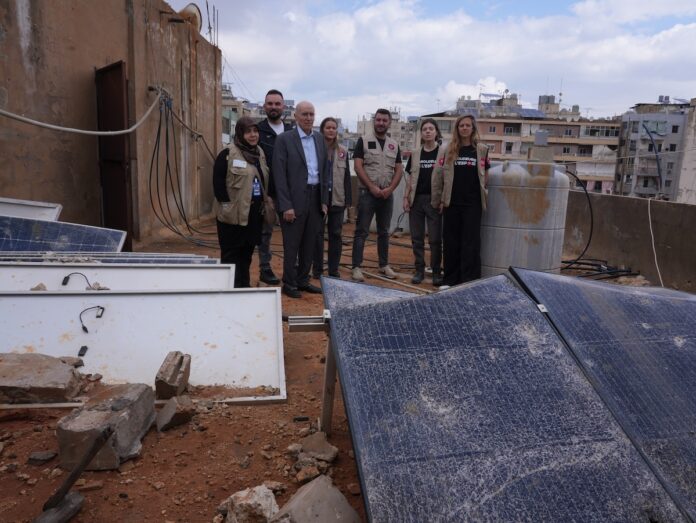
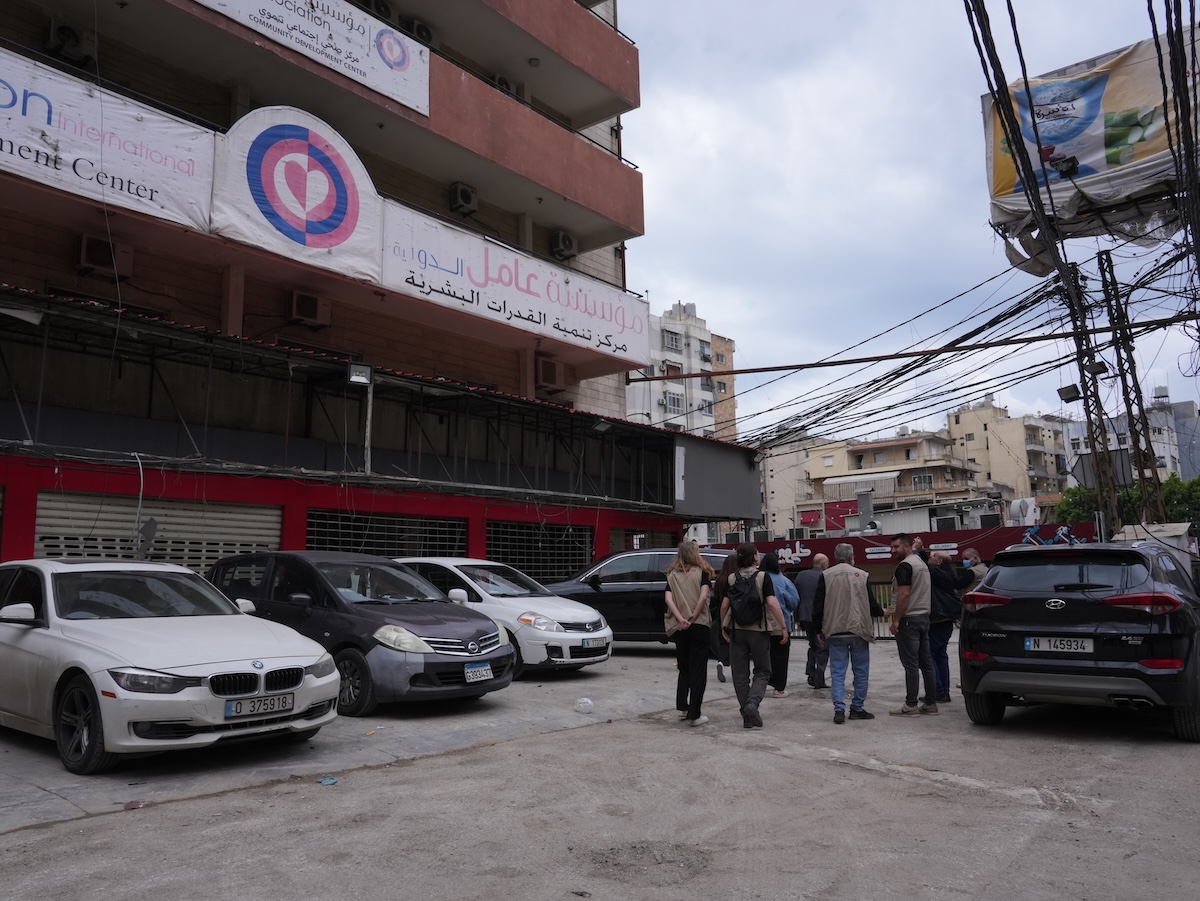
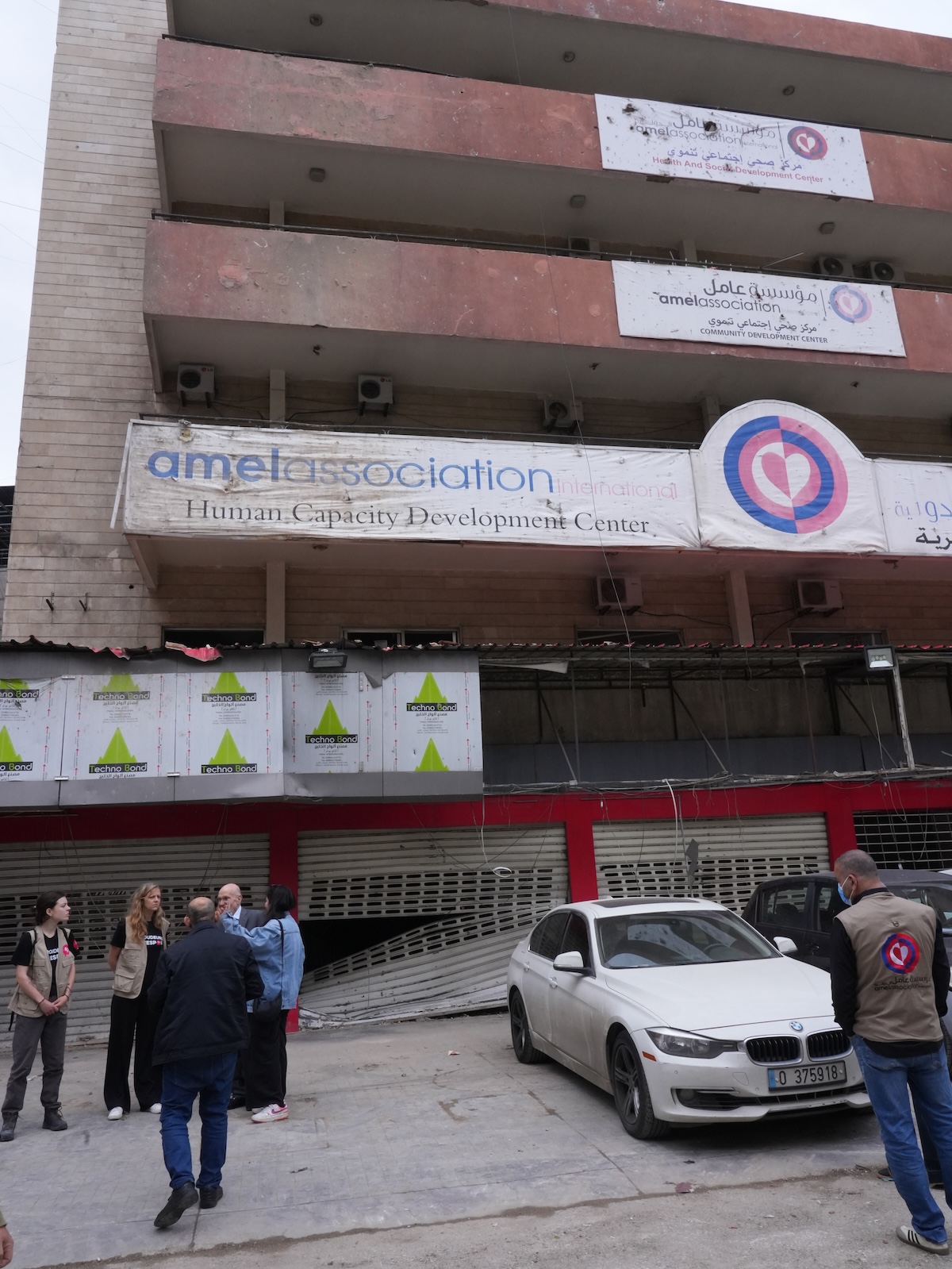
Days after the announcement of a ceasefire in Lebanon, and following recent weeks marked by Israeli aggression that resulted in widespread destruction of infrastructure and civilian facilities, casualties, and the displacement of large numbers of residents, alongside a deterioration in living conditions and basic services, Dr. Kamel Mohanna, President of Amel International Foundation, conducted a field visit to a number of the organization’s damaged centers in Beirut’s southern suburbs. The visit took place in the presence of a French delegation headed by Ms. Diane Antaki, General Commissioner of Baroudeurs de l’Espoir. In the presence of media figures Hussein Ayoub, Ahmed Talal Salman, and Rabih Salman.
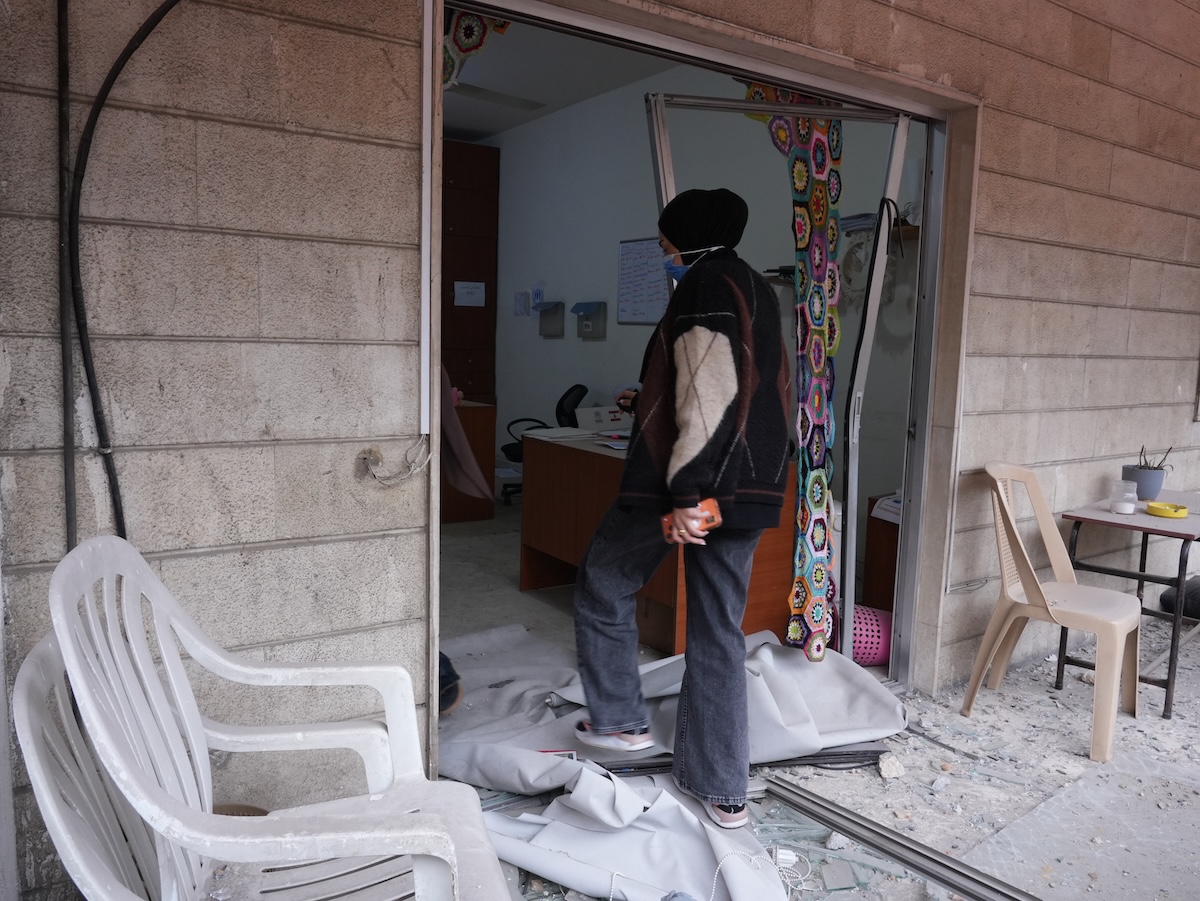
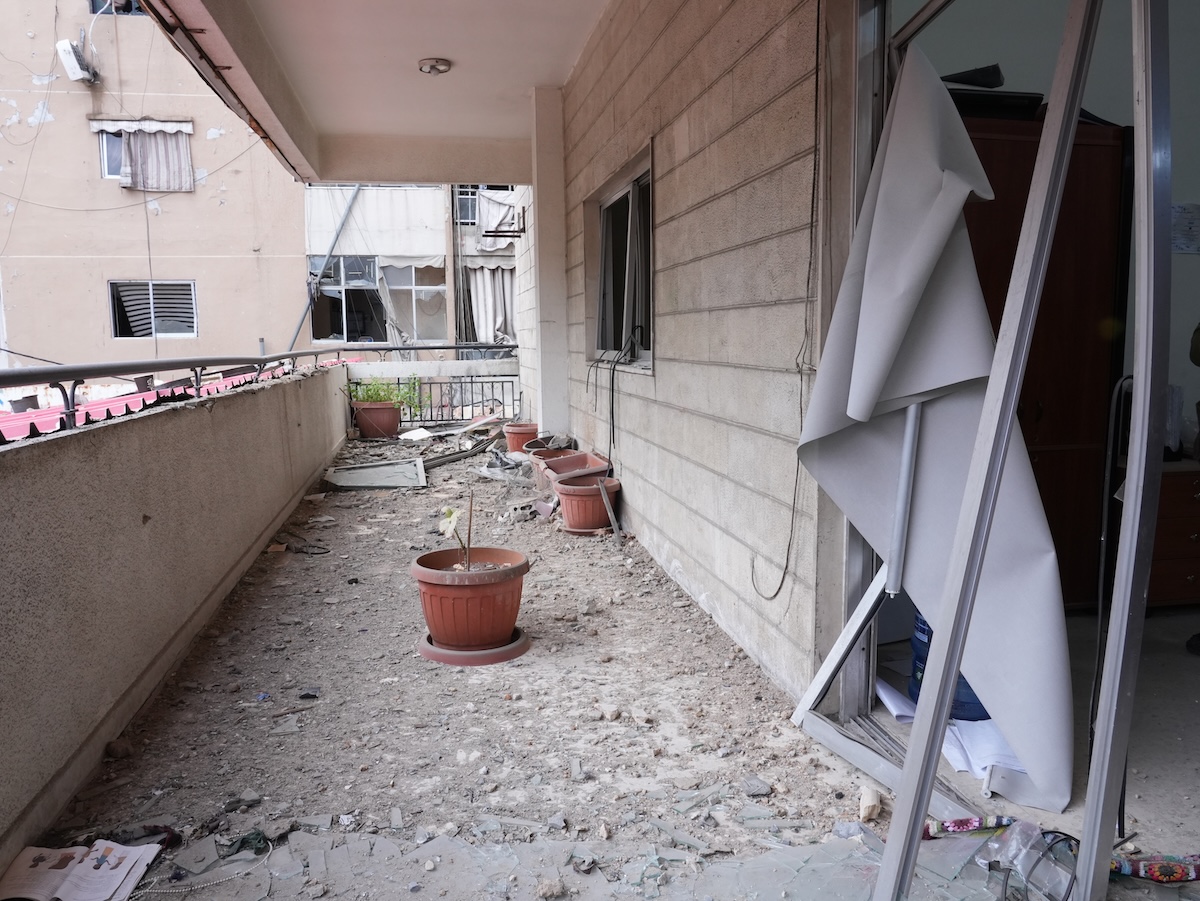
The tour included Amel’s primary healthcare and social development centers in Haret Hreik, Baajour, and Hay El Sellom, where Dr. Mohanna closely assessed the extent of the damage and its direct impact on the continuity of programs implemented to ensure people’s access to their basic rights, particularly in healthcare, education, protection, and empowerment. The French delegation accompanied the visit as an expression of solidarity and support for the organization’s efforts.
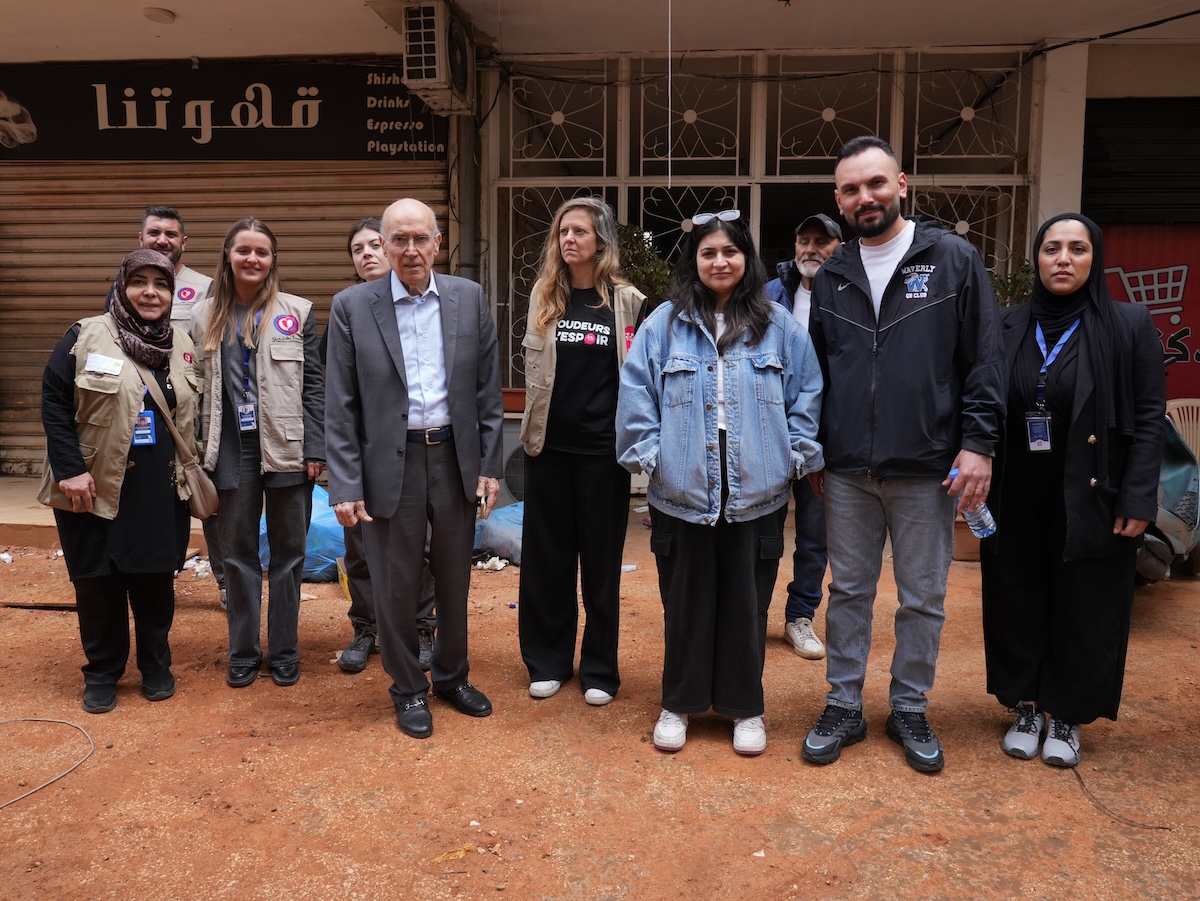 These centers, like all Amel centers, represent more than mere sites for program implementation. They serve as safe and vibrant spaces at the heart of communities, welcoming children, women, and youth, and providing opportunities for learning, growth, support, and resilience. Their damage has reduced these vital spaces and increased pressure on communities already facing harsh conditions.
During the visit, Amel teams presented the growing field challenges and ongoing efforts to ensure continuity of work despite the destruction, including the activation of mobile clinics and alternative activities, stemming from the organization’s enduring commitment to stand by people under all circumstances.
Ms. Diane Antaki affirmed that the presence of the French delegation reflects clear solidarity with Amel and the communities it serves, and comes within the framework of strengthening partnerships with local actors who continue their work with determination despite complexities. She emphasized the importance of supporting community-based initiatives to ensure the continuity of humanitarian response.
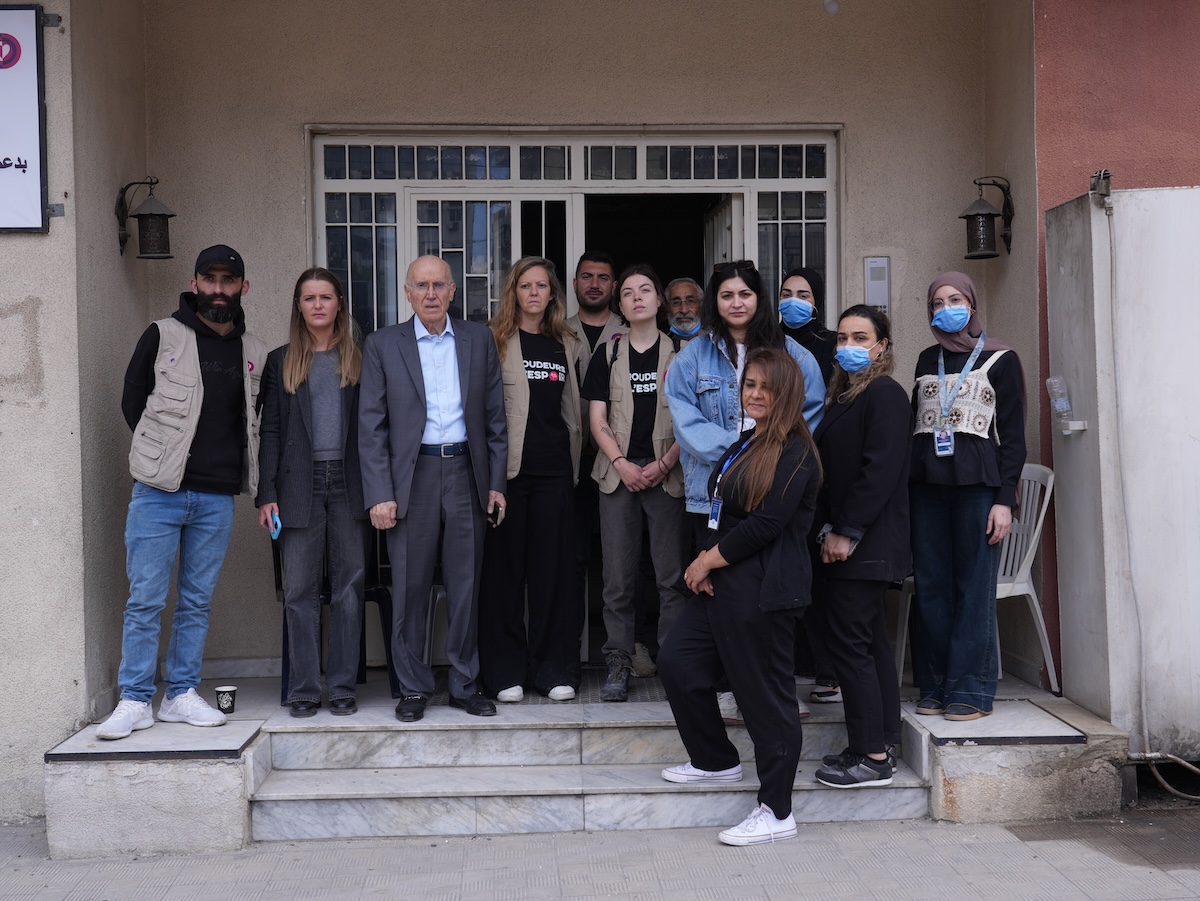 For his part, Dr. Kamel Mohanna stressed that “what we have witnessed in recent weeks is not merely a passing crisis, but a deep wound in the body of this nation, affecting people, their dignity, and their right to live in peace. Targeting health and social facilities is a direct attack on people and their capacity to remain resilient,” affirming that “Amel will remain by the side of the people, a movement for change that defends dignity and justice, and works with communities to strengthen their ability to rise again.”
This visit falls within the framework of an ongoing partnership between Amel and Baroudeurs de l’Espoir, which began in 2018 and aims to support the most vulnerable children in Lebanon, particularly those enrolled in public schools who require academic support during the school year.
In this context, Amel, with the support of Baroudeurs de l’Espoir, implements educational activities through a mobile education unit in the West Bekaa, a bus equipped for educational and recreational activities. It works with children living in informal settlements, providing them with direct educational support, as well as tutoring sessions during the school year and summer programs. Activities also include awareness and support sessions for parents, aimed at strengthening the continuity of children’s education and providing a supportive environment.
This tour reflects a model of complementarity between local field leadership and international solidarity, contributing to sustaining essential programs and supporting community resilience amid the current conditions.

 Creative Commons Attribution 4.0 International license


