




Source International, Amel Italia and Amel Association International are publishing the results of the first pilot monitoring campaign conducted under the Turabna – Janoub Soil Monitoring project in the districts of Nabatieh and Marjaayoun in South Lebanon
Almost two years after the start of the military escalation in South Lebanon, Source International, Amel Italia and Amel Association International are publishing the technical report Legacy of conflict in South Lebanon’s soils, which presents the results of the first soil monitoring campaign carried out as part of the Turabna – Janoub Soil Monitoring project. Alongside the technical report, the partners are also releasing the findings from 122 interviews and 3 focus groups conducted with local farmers and community members.
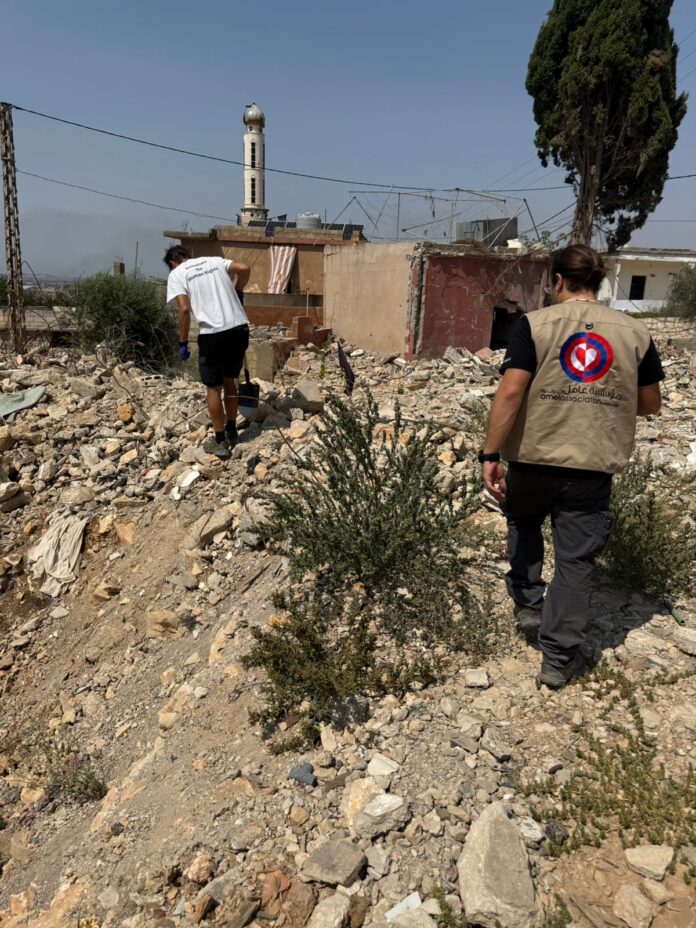
The campaign took place in August 2025 in the Nabatieh Governorate, one of the areas most heavily affected by the attacks that began in October 2023. More than 8,500 attacks were recorded in the region, including shelling, airstrikes and 247 suspected incidents involving the use of white phosphorus up to November 2024; the conflict caused almost 4,000 deaths and displaced more than 1.2 million people. Military operations also had major consequences for local ecosystems, with more than 2,200 hectares of forests and agricultural land burned.
The project stems from concerns raised by farmers, residents and local communities about the long-term effects of the war on soil quality, food security and agricultural productivity.
In the absence of specific national soil quality standards, the report compares the results of the 2025 campaign with historical samples collected in the same area in 2001 and with international reference values. The monitoring campaign included field soil sampling and laboratory analysis across multiple affected locations using internationally recognized environmental assessment methodologies. Its aim is to provide an initial independent scientific baseline to assess whether, and to what extent, the conflict has left a chemical trace in the soils of South Lebanon.
The analyses focused on some of the main contaminants associated with conflict settings: heavy metals linked to the use of ammunition and explosions; indirect indicators of white phosphorus use, including total phosphorus and soil pH; and uranium, used as a proxy to check for possible signals compatible with the use of depleted uranium.
The full report can be read at the following link: Legacy of conflict in South Lebanon’s soils 2026. The factsheet with the main results can be consulted following this link.
Key findings
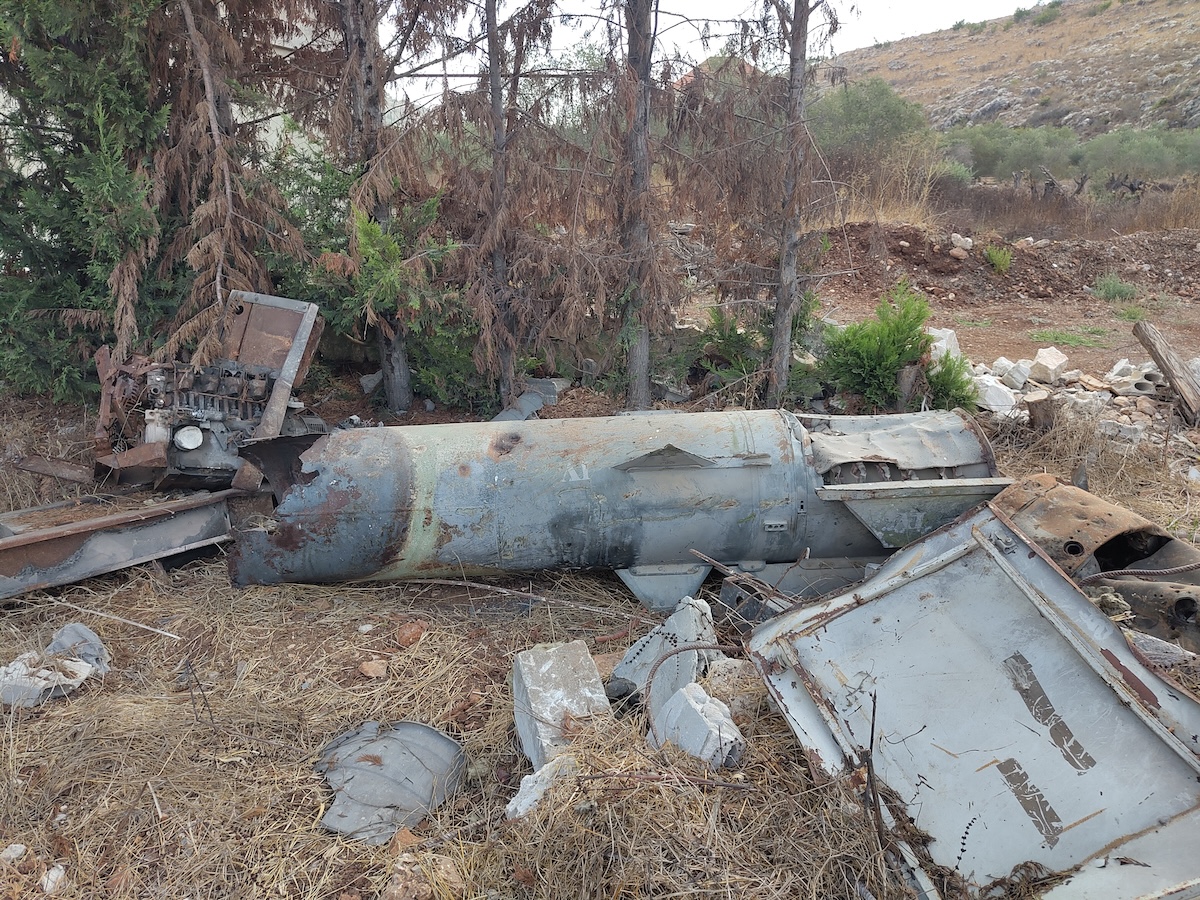
The most significant finding of the report concerns the increase in heavy metals directly associated with the use of weapons and ammunition. Between 2001 and 2025, lead, antimony, copper and zinc increased in a statistically significant way in the soils sampled in the districts of Marjaayoun and Nabatieh: four elements considered in the scientific literature to be typical fingerprints of military activities, as they are found in bullets, cartridge cases, ordnance fragments, shrapnel and other war-related materials.
The average increase observed at regional scale is generally moderate, but the signal is clear: compared with the historical samples from 2001, median concentrations increased by 1.5 times for lead, 3.6 times for antimony, 2.5 times for copper and 2.6 times for zinc. In sites that can be directly compared between 2001 and 2025, the increases are even more pronounced, with average ratios of 4.0 for lead, 4.6 for antimony, 4.4 for copper and 5.3 for zinc.
The most concerning picture concerns specific contamination hotspots, where concentrations clearly exceed both historical values and international reference values. The clearest case was detected in Houla, in the Marjaayoun district, one of the most devastated villages visited during the campaign: at this site, antimony was about 500 times higher than the 2001 median, while lead exceeded the German precautionary value. Other hotspots were identified near bombed homes, with elevated concentrations of lead, copper, zinc and antimony.
The report therefore describes contamination at two levels: on the one hand, a widespread deterioration in soil quality across the area studied; on the other, localized sites with much higher concentrations, requiring targeted investigation and priority attention. This pattern is consistent with observations from other post-conflict contexts, where explosions, dust, metal fragments and ammunition residues contribute to soil contamination over time.
Among the elements detected, lead is one of the main concerns because of its toxicity and environmental persistence. Arsenic and cadmium, which were also found to be higher in 2025 than in 2001, require attention because of their potential impacts on human health and ecosystems.
These findings show that the environmental impacts of war do not end when hostilities cease: they can remain in soils, agricultural land and the places where communities try to return to live and work. For this reason, the report underlines the need to continue monitoring, deepen the analyses at the most contaminated sites and integrate environmental assessments into post-conflict reconstruction processes.
Environmental Devastation in South Lebanon Threatens Public Health, Agriculture and Long-Term Recovery, Experts Warn
In remarks accompanying the release of the report, Flaviano Bianchini, Director of Source International and scientific coordinator of the project, stressed that international humanitarian law is founded on the principle that civilian life should be able to resume once hostilities end. He warned, however, that this becomes impossible when the environment itself has been devastated, agricultural lands contaminated, and water sources polluted or destroyed. Referring to the situation in South Lebanon, he noted that although more than one million people were encouraged to return to their homes and farmlands, many of these areas are no longer cultivable or safe for habitation. He cautioned that the environmental consequences of contamination may persist for decades, with serious implications for public health, agriculture, and the long-term recovery of affected communities.
Roberto Renino, President of Amel Italia and Project Coordinator, described the destruction witnessed in villages across South Lebanon as evidence of indiscriminate violence, pointing to the devastation of entire villages, uprooted trees, sabotaged infrastructure, and the widespread damage to the countryside. He further condemned the use of internationally prohibited incendiary munitions, including white phosphorus, arguing that such practices contributed to creating “scorched earth” conditions that rendered entire areas unliveable and collectively targeted civilian populations and their livelihoods. He emphasized that beyond the immediate devastation and displacement, the systematic destruction of ecosystems poses long-term risks to food security and food sovereignty in a region already highly vulnerable to climate change. He added that accountability for the environmental and humanitarian consequences of these acts remains an obligation insufficiently addressed by the international community despite the extensive evidence available.
For her part, Dr. Zeina Mohanna, Partnership and Programs Coordinator, highlighted that the findings confirmed the presence of internationally prohibited materials through the detection of elevated concentrations of heavy metals directly associated with warfare, warning that this amounts to ecocide. She expressed deep concern over the long-term health consequences, including increased respiratory illnesses and a reported rise in cancer cases, noting that at least 75% of farmers in the affected areas have lost their livelihoods for years to come. She described the situation as catastrophic and stressed the urgent need for environmental remediation and sustained international attention.
About Source International
Source International is a non-profit organization founded in Italy in 2012 to support communities affected by industrial and extractive pollution through independent scientific evidence. It works at the request of communities, providing technical and scientific support, legal analysis and training, with the aim of turning data into concrete change: sanctions, reforms, remediation and official recognition of environmental and health emergencies.
About Amel Italia
Amel Italia is a non-profit association based in Italy, working at the intersection of environmental justice, climate action and humanitarian response. The organization adopts a data-driven, community-centred approach, providing individuals and groups with the tools and training they need to engage directly in climate action. Its work is grounded in the principles of decoloniality, innovation and grassroots mobilization.
About Amel Association International
Amel is a non-governmental and non-confessional association founded in 1979 by Dr Kamel Mohanna and a group of doctors, journalists and activists in response to the atrocities of the Lebanese Civil War and the aggressions in South Lebanon. For more than 45 years, and with over 1,500 staff members, Amel has operated through 40 centres, 10 mobile medical units, 2 mobile education units and 2 protection units in Lebanon’s most marginalized regions.

 Creative Commons Attribution 4.0 International license


