





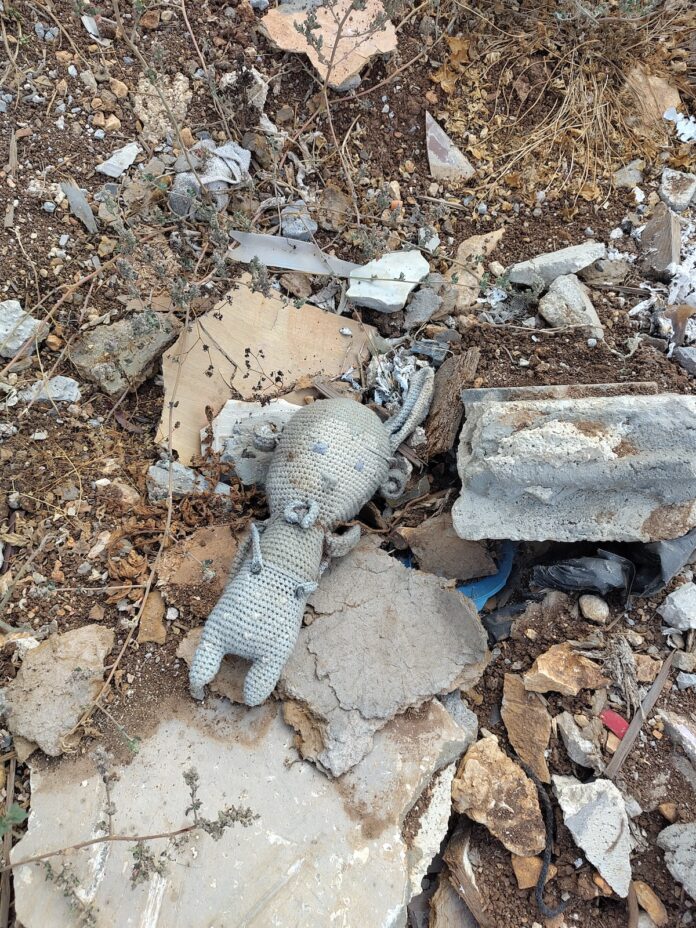
A new joint report by Source International, Amel Italia and Amel Association International reveals alarming evidence of environmental contamination linked to military activities in South Lebanon. Conducted under the Turabna – Janoub Soil Monitoring Project, the study presents the findings of the first independent soil monitoring campaign carried out in August 2025 across the districts of Nabatieh and Marjaayoun.
The report documents statistically significant increases in heavy metals associated with warfare, including lead, antimony, copper and zinc, compared with historical soil samples collected in 2001. Researchers identified both widespread deterioration in soil quality and localized contamination hotspots near heavily bombed areas, particularly in Houla, where antimony levels reached nearly 500 times historical averages.
The findings raise serious concerns regarding long-term public health risks, food security, agricultural productivity and environmental recovery in South Lebanon. The report also highlights the broader ecological consequences of war, including damage to agricultural lands, forests and local ecosystems, while calling for continued environmental monitoring, remediation efforts and accountability for environmental harm caused during the conflict.
The publication is accompanied by testimonies gathered through 122 interviews and three focus groups with local farmers and residents affected by the conflict and its environmental aftermath.
The full report can be read at the following link: Legacy of conflict in South Lebanon’s soils 2026. The factsheet with the main results can be consulted following this link.

 Creative Commons Attribution 4.0 International license

