





Mohanna, Aina, Novara, Ghali and Chai Call for Transforming the Memory of the Massacre into Sustained Action for Justice, the Right of Return and the Protection of Civilians
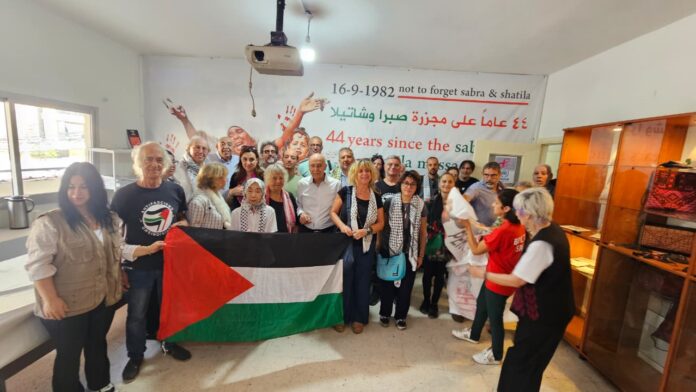
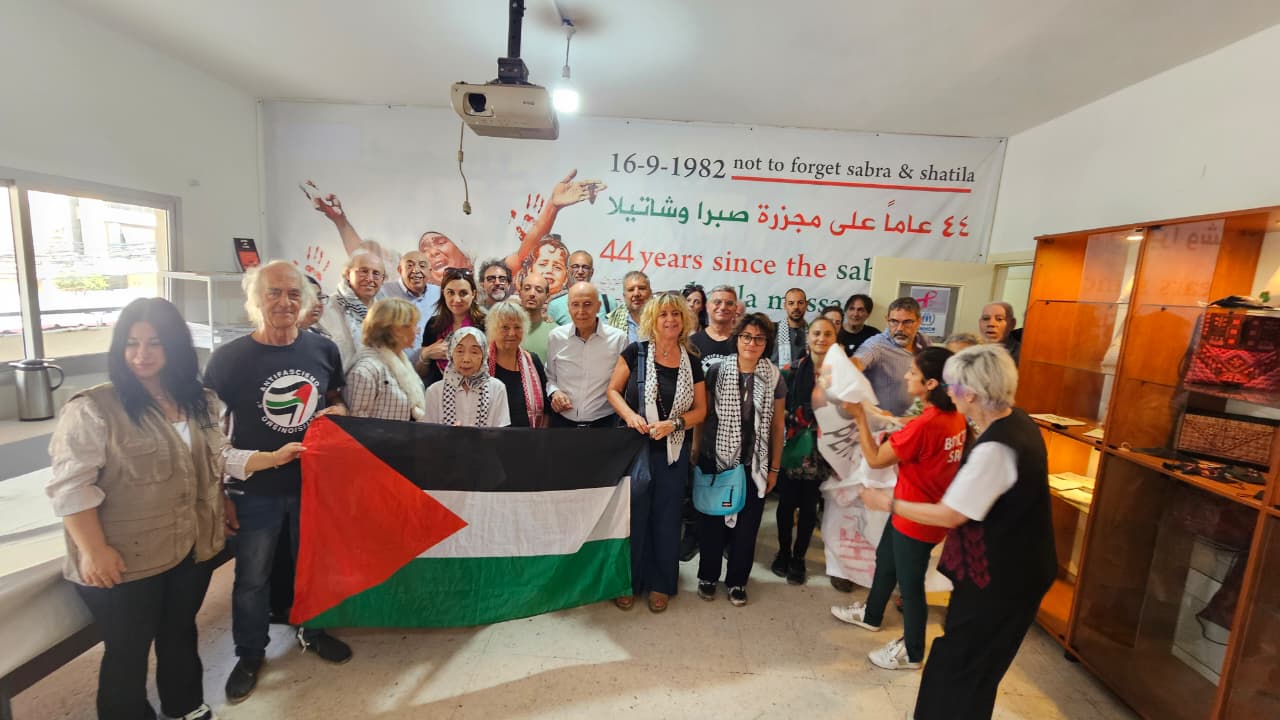
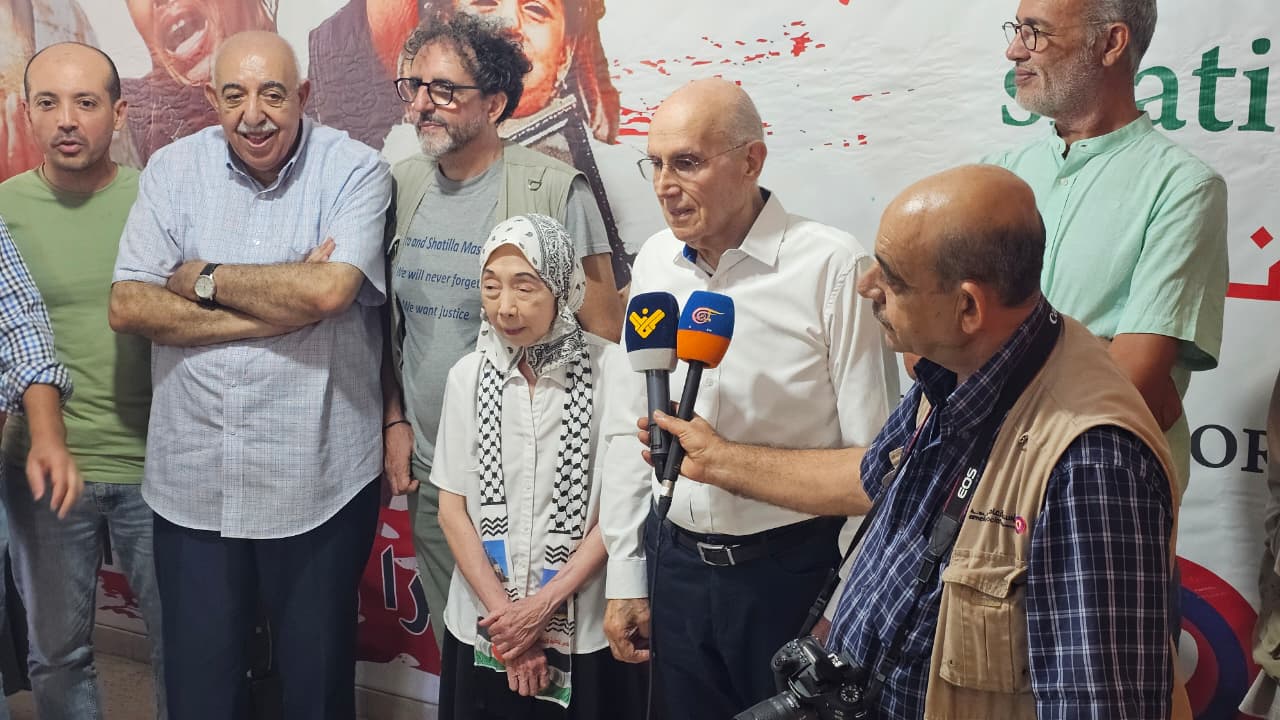
Beirut – Amel Association International welcomed a delegation from the “Never Forget Sabra and Shatila and the Right of Return” Committee at its Human Capacity Development Centre in Haret Hreik. The delegation included activists from Italy and other European countries and visited Lebanon as part of the Committee’s annual programme marking the 44th anniversary of the Sabra and Shatila massacre.
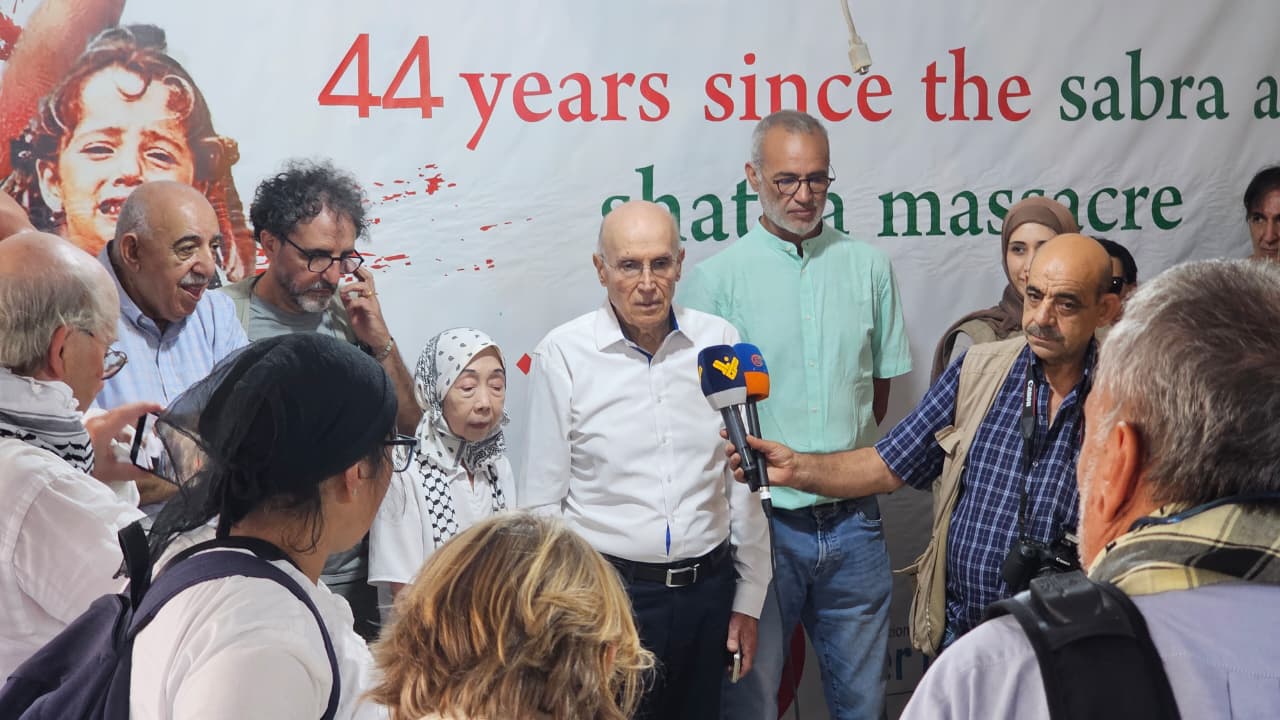
The meeting was attended by Dr Kamel Mohanna, President of Amel Association International; Flavio Novara, the Committee’s representative; Dr Kassem Aina, Coordinator of the Committee’s activities in Lebanon and President of the National Institution of Social Care and Vocational Training (Beit Atfal Assumoud); Aziz Ghali, Global Coordinator of the People’s Health Movement; and Swee Chai, a British physician of Malaysian origin. Also in attendance were Dr Zeina Mohanna, Amel’s Director of Programmes and Partnerships, and several members of the organisation’s staff.
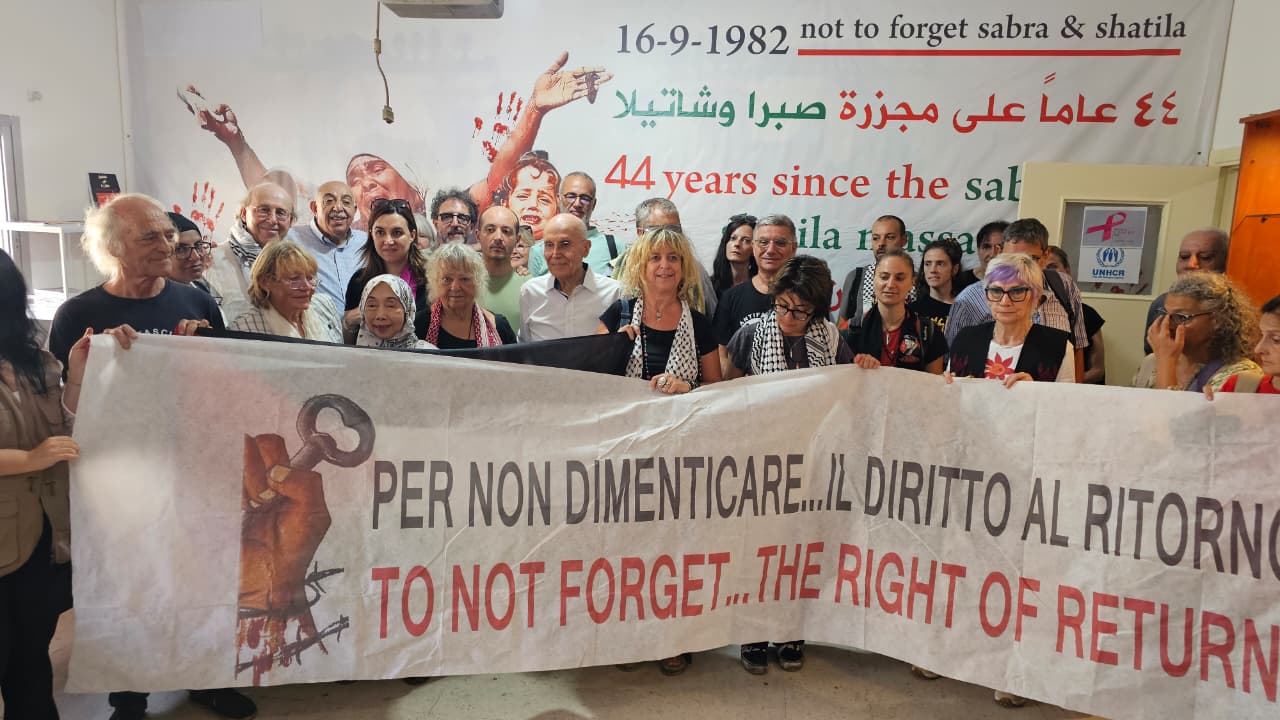
Discussions focused on the importance of preserving the memory of the victims of the Sabra and Shatila massacre and connecting it to the continuing struggle for justice and the right of return. The meeting took place amid large-scale crimes committed in Gaza, escalating settlement expansion and displacement in the West Bank, and ongoing Israeli attacks on Lebanon, which have caused death, displacement and widespread destruction of homes, essential infrastructure and the foundations of daily life, particularly in southern Lebanon.
Welcoming the delegation, Mohanna expressed his appreciation for its decision to visit Lebanon under such difficult circumstances. He said that commemorating the Sabra and Shatila massacre was not merely about recalling the past, but also about preventing the recurrence of such crimes and confronting impunity. He stressed that justice is both a right of victims and a safeguard for the living, warning that the absence of accountability and the selective application of international law pave the way for new tragedies and undermine the credibility of the international system.
Mohanna added that defending the Palestinian people’s rights to freedom, return and self-determination, as well as the right of residents of southern Lebanon to return to their villages and rebuild their lives, is a defence of human dignity, existence and the future. He affirmed that Amel would continue its health, social, development and humanitarian work alongside its advocacy for human rights, guided by solidarity rather than charity and by the principle that every person is a rights-holder, not merely a recipient of assistance.
For his part, Aina said the annual visit provided an opportunity to engage directly with families and local communities and convey their testimonies to European public opinion. He stressed that the words “Never Forget” require sustained action to protect the truth from erasure and distortion, educate younger generations about the massacre, and support the Palestinian people’s right to return and live in freedom and dignity. He also highlighted the long-standing partnership between Beit Atfal Assumoud, Amel and the Committee in serving Palestinian refugees and defending their rights.
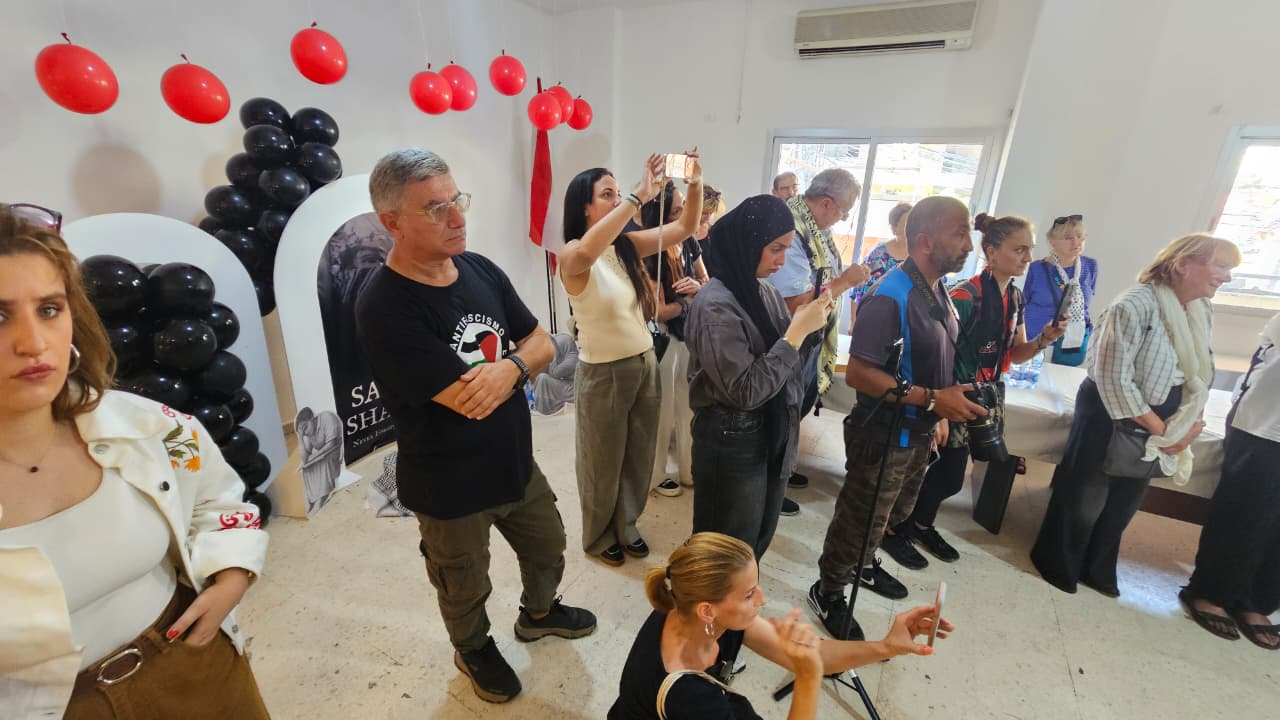
Novara expressed the solidarity of the Committee’s members and the European delegation with the Palestinian and Lebanese peoples, noting that their presence in Lebanon carried a message of loyalty to the victims and a refusal to remain silent in the face of the crimes witnessed by the world today. He emphasised the importance of continuing grassroots and civil-society mobilisation in Europe and conveying the testimonies and facts gathered by the delegation to relevant communities and institutions, thereby broadening solidarity and strengthening calls for accountability and respect for international law.
Aziz Ghali, Global Coordinator of the People’s Health Movement, spoke about the close relationship between the right to health, social justice and peoples’ right to self-determination. He stressed that health cannot be separated from the political and social conditions in which people live. He said that occupation, war, displacement and the destruction of essential infrastructure do not merely deprive civilians of medical treatment but undermine every foundation of health and life, including housing, water, food, safety and dignity.
Ghali called for stronger solidarity among health and popular movements worldwide, the protection of health workers and medical facilities, and collective action to prevent healthcare from becoming a casualty of war, siege and impunity.
Swee Chai, a British physician of Malaysian origin, reflected on her humanitarian experience in connection with the Sabra and Shatila massacre. She affirmed that bearing witness to the suffering of victims creates an enduring moral responsibility to speak the truth and resist forgetting. She stressed that protecting civilians, the wounded and medical personnel is not optional but a humanitarian and legal obligation, and that attacks on hospitals and healthcare workers, as well as the denial of medical treatment to the injured, compound the devastating effects of war on communities.
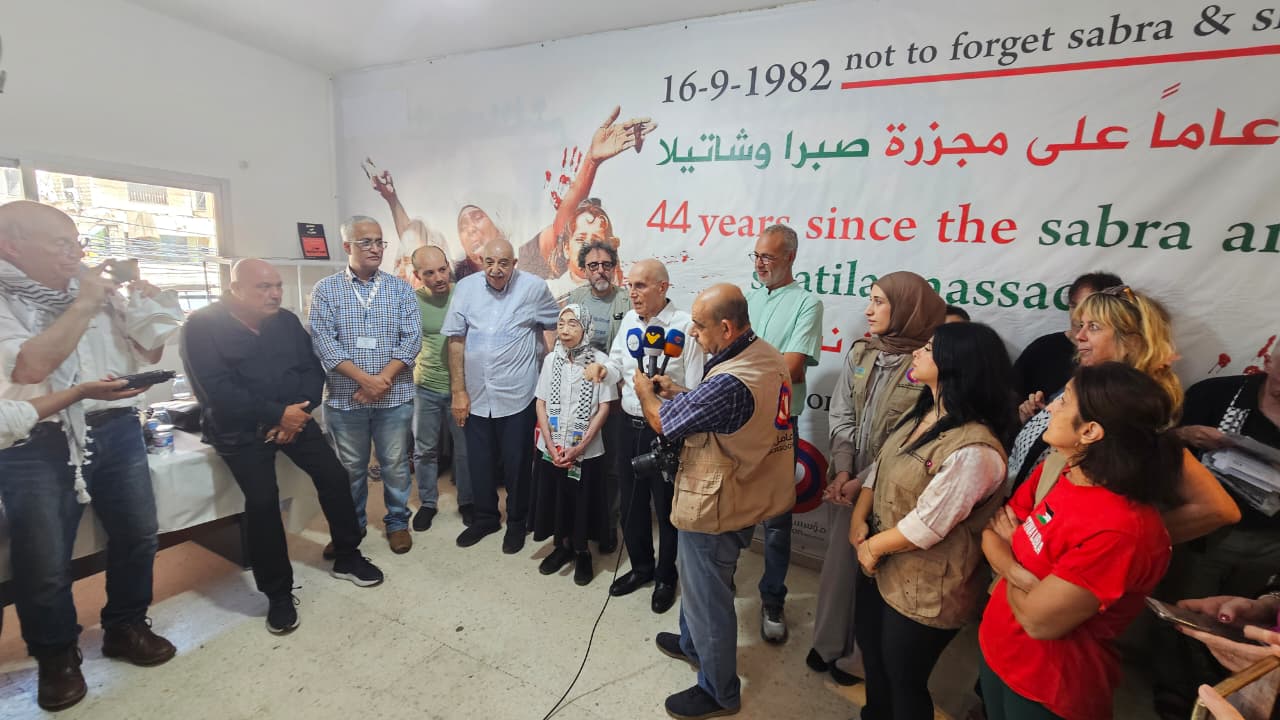
Chai called on physicians, health workers and the international public to continue speaking out to end the attacks, ensure access to healthcare for those in need and hold those responsible for violations accountable.
Participants also reflected on the significance of holding the meeting at Amel’s centre in Haret Hreik, which had been damaged and destroyed in an attack before being restored. The centre had previously hosted a documentary exhibition on the Sabra and Shatila massacre and played a central role in launching cooperation between Amel and the Committee. Participants affirmed that the centre’s reopening and continued activities embody the determination to live and remain in the face of destruction and uprooting, as well as a commitment to memory and justice in the face of attempts at erasure and impunity.
The meeting concluded with a commitment to continue cooperation and organise joint activities, transform memory into a force for action in the present and future, and mobilise the broadest possible solidarity with victims of violations in Palestine and Lebanon. Participants also called for the protection of civilians, accountability for those responsible for crimes, and the safeguarding of peoples’ rights without selectivity or double standards.

 Creative Commons Attribution 4.0 International license


