



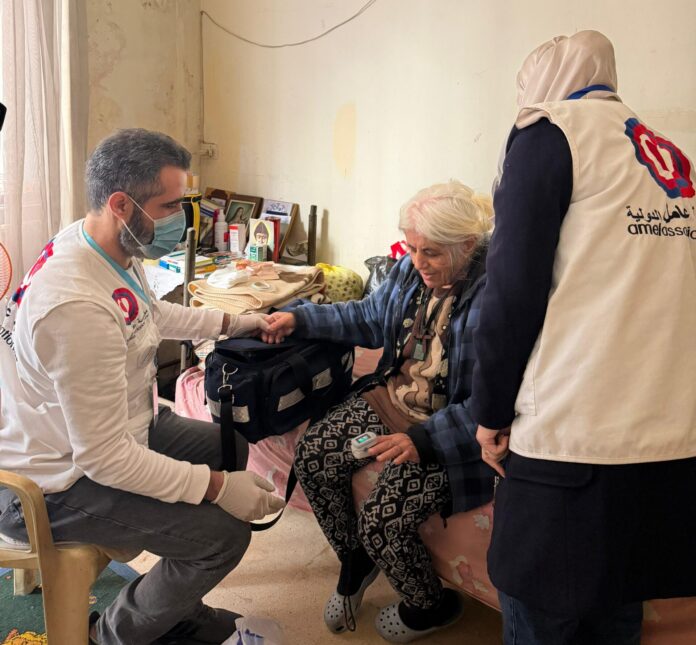
For months, the distance between Nohad Melhem and the outside world seemed to begin at her own front door.
After surgery for colon cancer left her with a permanent colostomy, ordinary activities became fraught with anxiety. Leaving home meant worrying about leakage, odors, skin irritation or infection. Without adequate guidance, even changing a colostomy bag felt uncertain and overwhelming.
The cost of supplies deepened the strain. Unable to afford new bags regularly, Nohad sometimes used the same one for longer than recommended, increasing the risk of discomfort and complications. What began as a medical challenge gradually reshaped every part of her life.
Fear eroded her confidence. She avoided public places, became increasingly dependent on others and slowly withdrew from the people around her. Isolation settled into her daily routine, accompanied by the feeling that she had lost control over her own body and life.
The turning point came when Nohad reached out to Chiyah Municipality for help.
A social worker referred her case to the team supporting older people, and an outreach worker visited her home to assess her needs. Recognizing the urgency of her condition, the team immediately referred her for medical assistance.
A doctor and nurse arrived that same day.
They assessed Nohad’s condition, replaced her colostomy bag and began teaching her how to care for her stoma safely. They explained each step: how to change the bag, maintain hygiene, protect the surrounding skin and recognize warning signs that might require medical attention.
It was the beginning of sustained support rather than a one-time intervention.
A nurse started visiting Nohad twice a week to change her colostomy bag, with its base replaced weekly. She also received individual psychosocial support to help her address the anxiety, shame and isolation that had followed her surgery. To improve her mobility, she was provided with a tripod cane, allowing her to move more safely and rely less on others.
The changes came gradually but meaningfully. Regular nursing visits eased her fear of complications. Practical guidance helped her understand and manage her colostomy with greater confidence. Emotional support gave her a space to speak openly about an experience that had left her feeling deeply alone.
The cane, meanwhile, offered something equally important: the ability to move with greater independence.
“Before receiving this support, I felt afraid, ashamed and completely alone,” Nohad said. “I did not know how to care for my colostomy and could not afford the bags I needed. Today, I feel safer and more confident because I know that someone is following up on my health and listening to me.”
For Nohad, being listened to mattered almost as much as the medical care itself.
“The nursing care, emotional support and walking cane have helped me regain my dignity and independence,” she added. “Most importantly, I no longer feel abandoned or like a burden on my family.”
Her recovery cannot be measured only through clinical indicators. It is also visible in the confidence she has regained, the fear she has begun to overcome and the everyday decisions she can once again make for herself.
Nohad now hopes to improve her mobility further, manage her colostomy with greater independence and gradually return to family and community life. Her goal is simple but profound: to preserve the progress she has made and continue living with dignity and peace of mind.
Her experience illustrates what person-centred care can achieve when medical assistance is combined with psychosocial support, practical guidance and consistent follow-up. For Nohad, that combination did more than address an urgent health need. It helped reopen a world that fear had steadily closed around her.
Acknowledgment
With the support of Caritas Germany, Amel Association International continues to provide integrated health, psychosocial and social services to people experiencing vulnerability, helping them protect their health, restore their independence and live with dignity.

 Creative Commons Attribution 4.0 International license


