



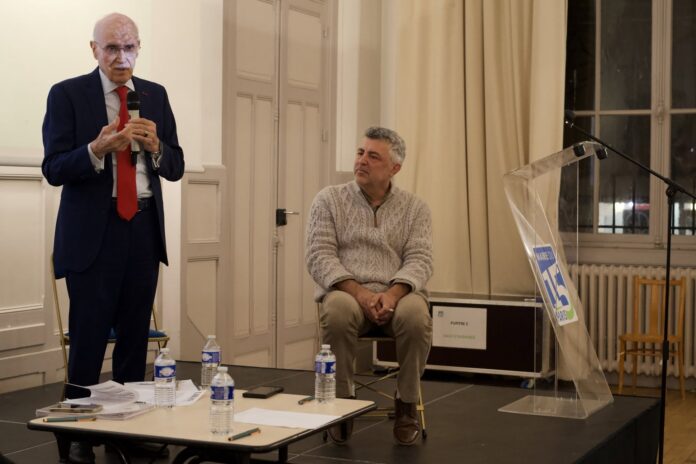
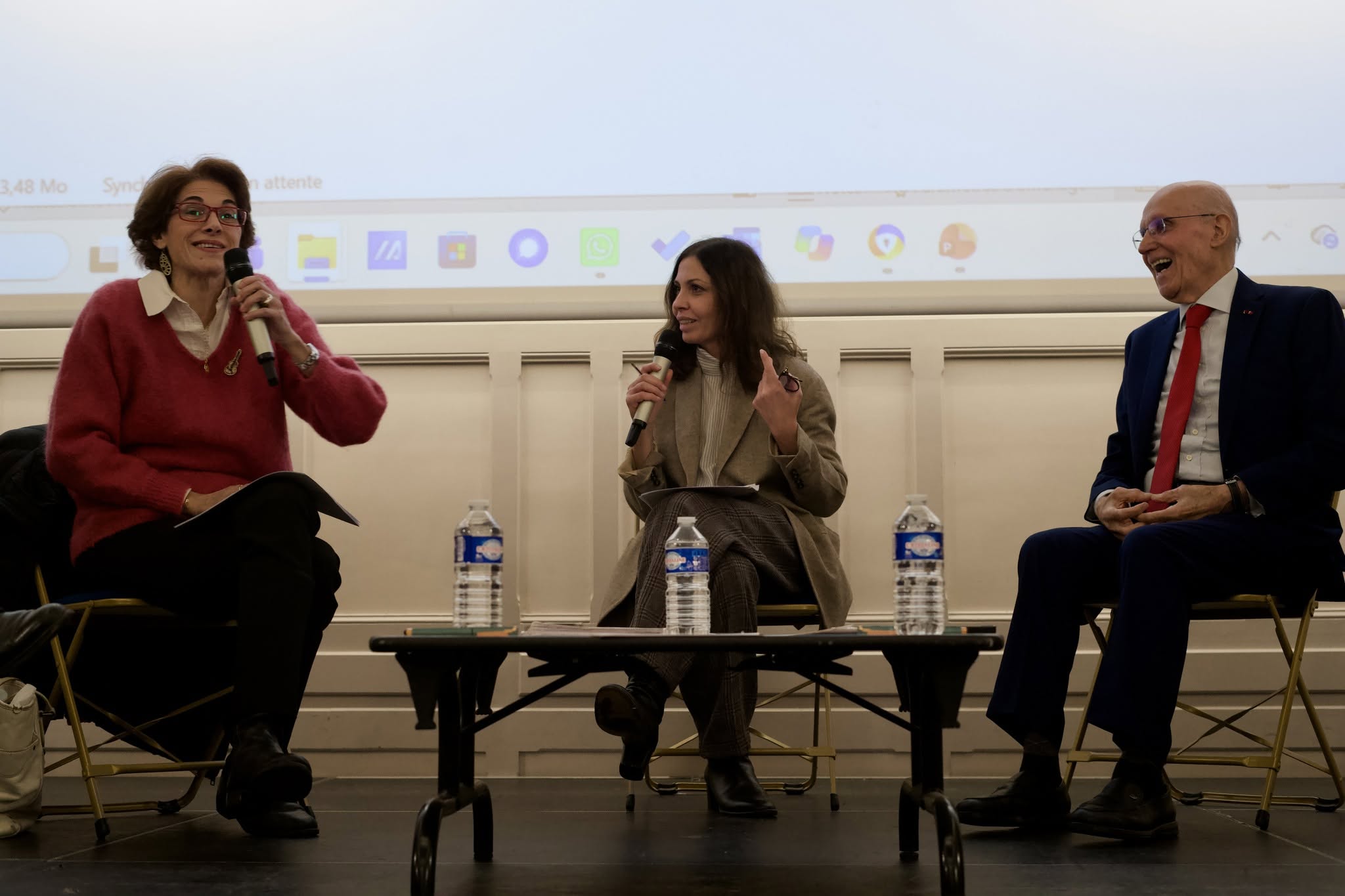
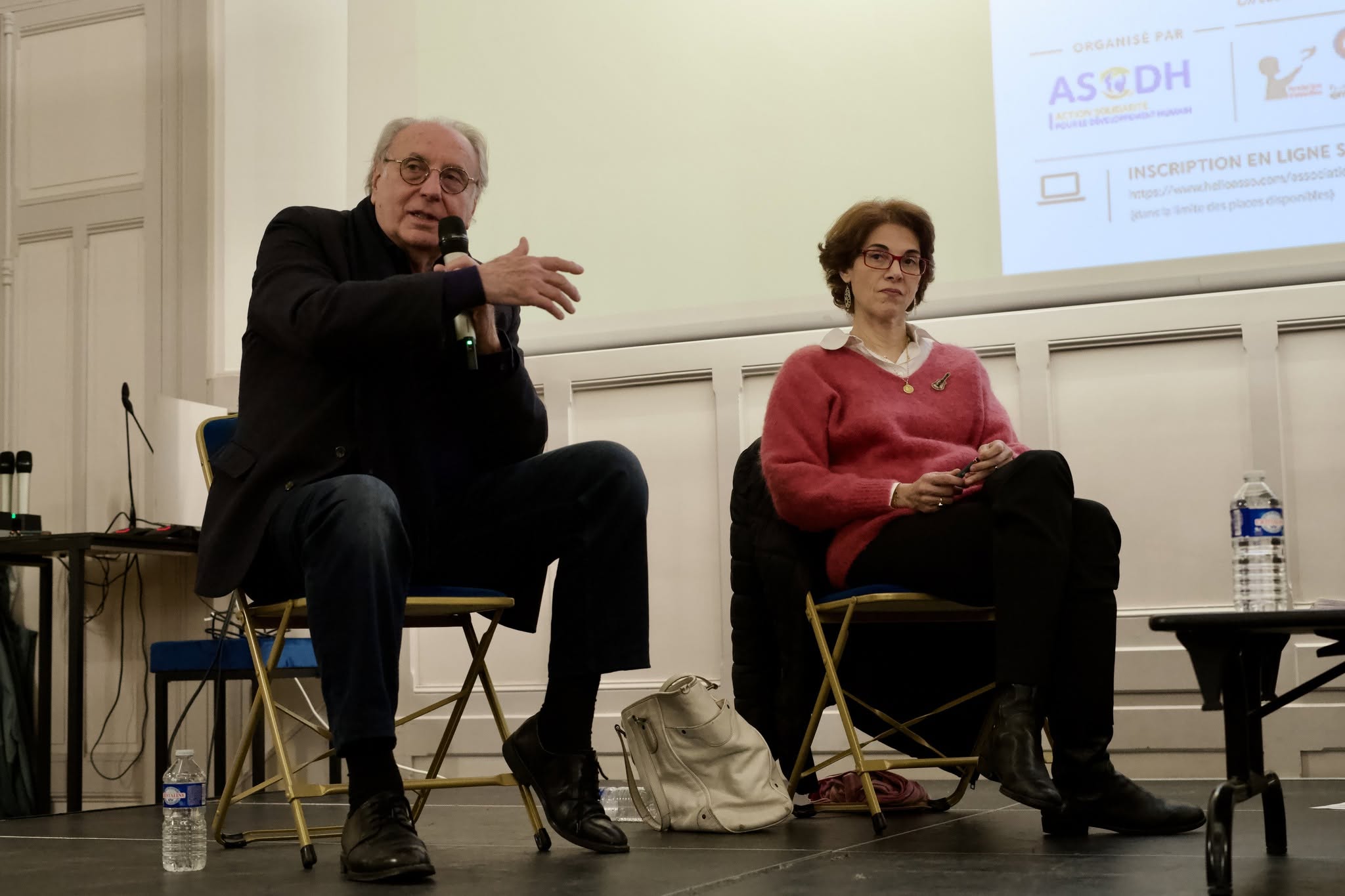
Action Solidarité pour le Développement Humain (ASODH) and Amel France brought together researchers, civil society leaders and international solidarity practitioners for a roundtable titled “Lebanon: Situation on the Ground and Challenges Ahead.” Dr Kamel Mohanna, President of Amel Association International and General Coordinator of the Collective of Lebanese and Arab Voluntary NGOs, set out four priorities for reconstruction, including civilian protection, investment in public services and a role for local communities in decision-making. Bernard Kouchner paid tribute to Amel’s work and to the commitment of its founder.
What does a displaced family need to return to its village in southern Lebanon? A passable road, running water, an open school, a health centre within reach and a way to earn a living. Dr Mohanna used these everyday needs to frame his remarks on reconstruction at the roundtable, which was hosted and supported by the town hall of Paris’s 15th arrondissement.
The discussion drew on research, healthcare and civil society experience to examine Lebanon’s political, social and humanitarian challenges. It formed part of Dr Mohanna’s visit to France and Belgium to strengthen Amel’s partnerships with civil society and human rights organisations.
Displacement continues to disrupt access to healthcare and food
The escalation of hostilities from 2 March 2026 hit a country already dealing with financial collapse, the consequences of the Beirut port explosion and weakened public services. By mid-April, the International Organization for Migration had recorded more than 1.2 million internally displaced people in Lebanon. As of 28 October, 304,520 people remained displaced, according to the United Nations Population Fund. In its report covering the period through 8 November, the Fund also reported that three hospitals and 21 primary healthcare centres remained closed.
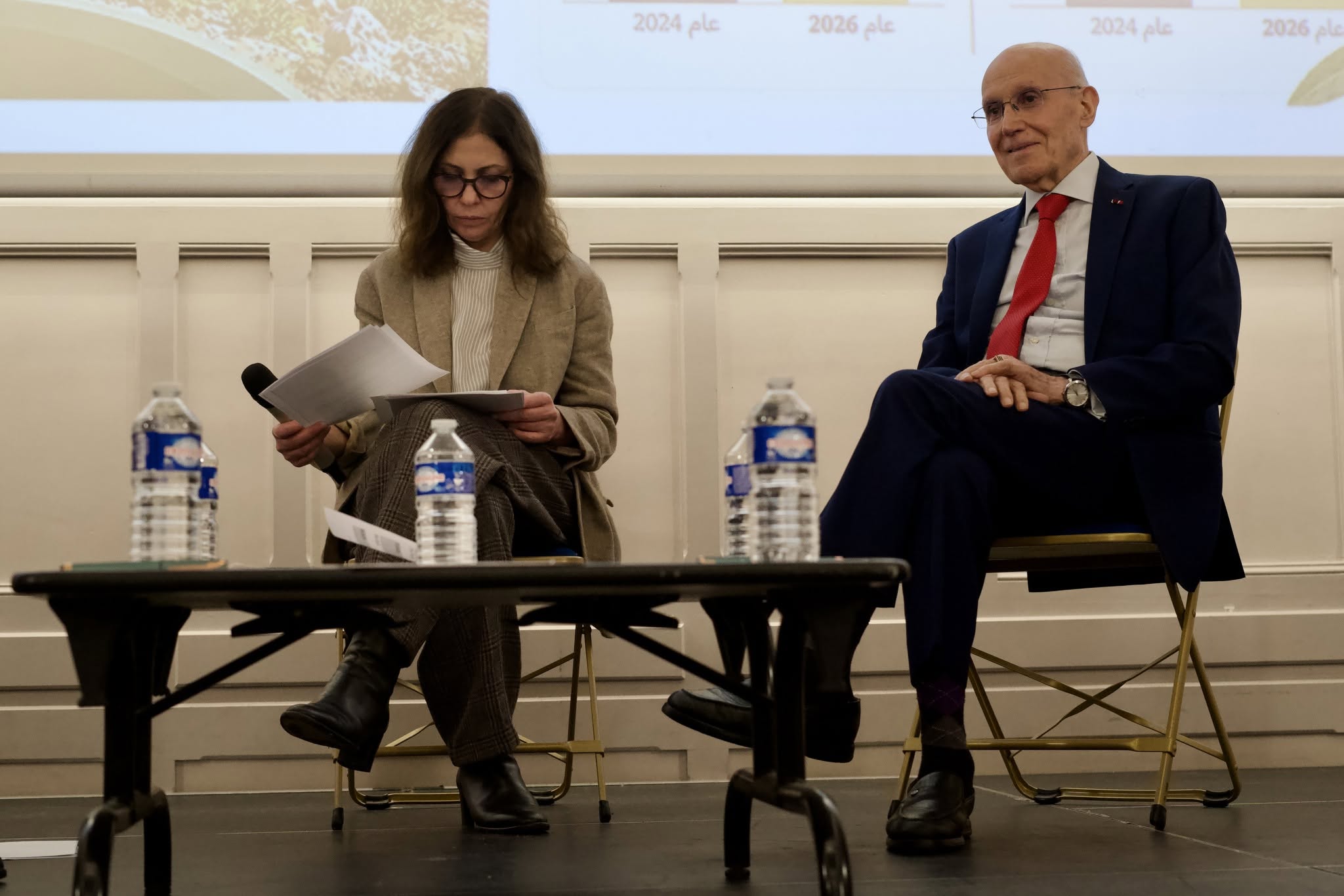
Dr Mohanna described what a health centre closure means for a family. A person with diabetes needs somewhere to obtain their next supply of medication. A pregnant woman needs to reach a maternity facility safely. Displaced parents need to find a medical team that can continue their child’s treatment. In southern Lebanon, hostilities, movement restrictions and explosive remnants of war continue to impede access to services and safe returns.
The crisis has also affected livelihoods. The Integrated Food Security Phase Classification (IPC) estimates that 1.05 million people, or 21 per cent of the population analysed, face crisis levels of acute food insecurity or worse between September 2026 and February 2027. That figure could reach 1.15 million between March and July 2027. Families cutting back on meals and farmers who have lost access to their land or means of production need immediate assistance and ways to earn a living again.
Protecting civilians, health workers and medical facilities
Dr Mohanna called for an end to attacks, respect for Lebanon’s sovereignty and compliance with international humanitarian law. He recalled the obligations of parties to a conflict to respect the rules of distinction, proportionality and precaution, as well as the specific protection afforded to medical personnel and units. He called for alleged violations to be documented and independently investigated to establish responsibility.
He also addressed the situation in Gaza. In December 2024, Amnesty International concluded that Israel was committing genocide against Palestinians in the Gaza Strip. In September 2025, the United Nations Independent International Commission of Inquiry concluded that Israeli authorities and Israeli security forces had committed genocide against Palestinians in Gaza. Dr Mohanna urged states to fulfil their obligations to prevent genocide and support mechanisms for justice. He reaffirmed that peace in the region requires the protection of all civilian populations and the effective realisation of the Palestinian people’s rights, including the right to self-determination.
Four priorities for reconstruction
- Create the conditions for voluntary and safe returns. Clearance of mines and explosive remnants should go hand in hand with restoring water and electricity and reopening schools and health centres. Dr Mohanna invited France and the European Union to support these efforts, as well as investigation and monitoring mechanisms.
- Invest in public services and social protection. Affordable primary healthcare and predictable assistance can reduce reliance on emergency aid. Children affected by displacement, interrupted schooling or the death of a family member also need dedicated staff and resources to support their recovery.
- Give local organisations a role in decisions and more direct access to funding. Dr Mohanna recalled the collective target set by the Grand Bargain in 2016 to channel at least 25 per cent of humanitarian funding to local and national responders as directly as possible. He called on donors to publish the share that reaches these organisations, involve them in decision-making and provide multi-year funding to teams that keep services running.
- Involve residents and municipalities in reconstruction decisions. People affected should be able to set priorities, see how compensation is determined and challenge decisions that affect them. Dr Mohanna proposed measuring progress through outcomes such as children returning to school, people regaining access to healthcare and households earning a regular income again.
In March 2025, the World Bank estimated recovery and reconstruction needs related to the conflict from October 2023 to December 2024 at US$11 billion. Dr Mohanna stressed that damage sustained in 2026 requires a separate assessment.
Amel’s work with communities
Founded in 1979 during the war in Lebanon, Amel Association International now works through a network of 40 centres and mobile units. It provides services according to need, reaching Lebanese families, Syrian and Palestinian refugees, and migrant workers.
A vaccination appointment may reveal that a child has stopped going to school, that someone in the family needs psychosocial support or that a parent can no longer afford their medication. That is one reason Amel connects healthcare with education, protection, psychosocial support and livelihoods assistance. It works with ministries, municipalities, health teams and local associations to keep services available and bring the obstacles residents report to the attention of public authorities.
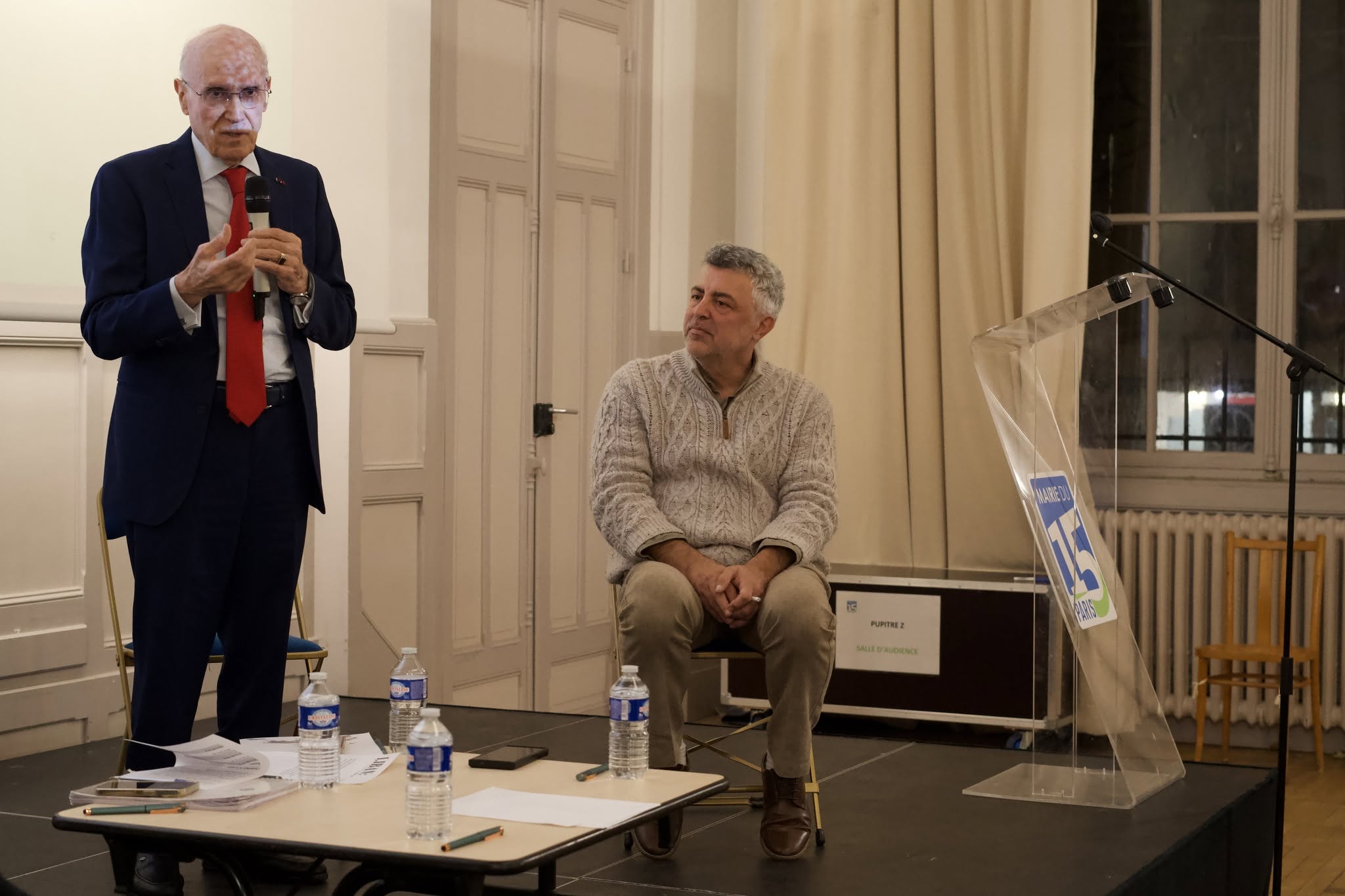
Bernard Kouchner pays tribute to Kamel Mohanna and Amel
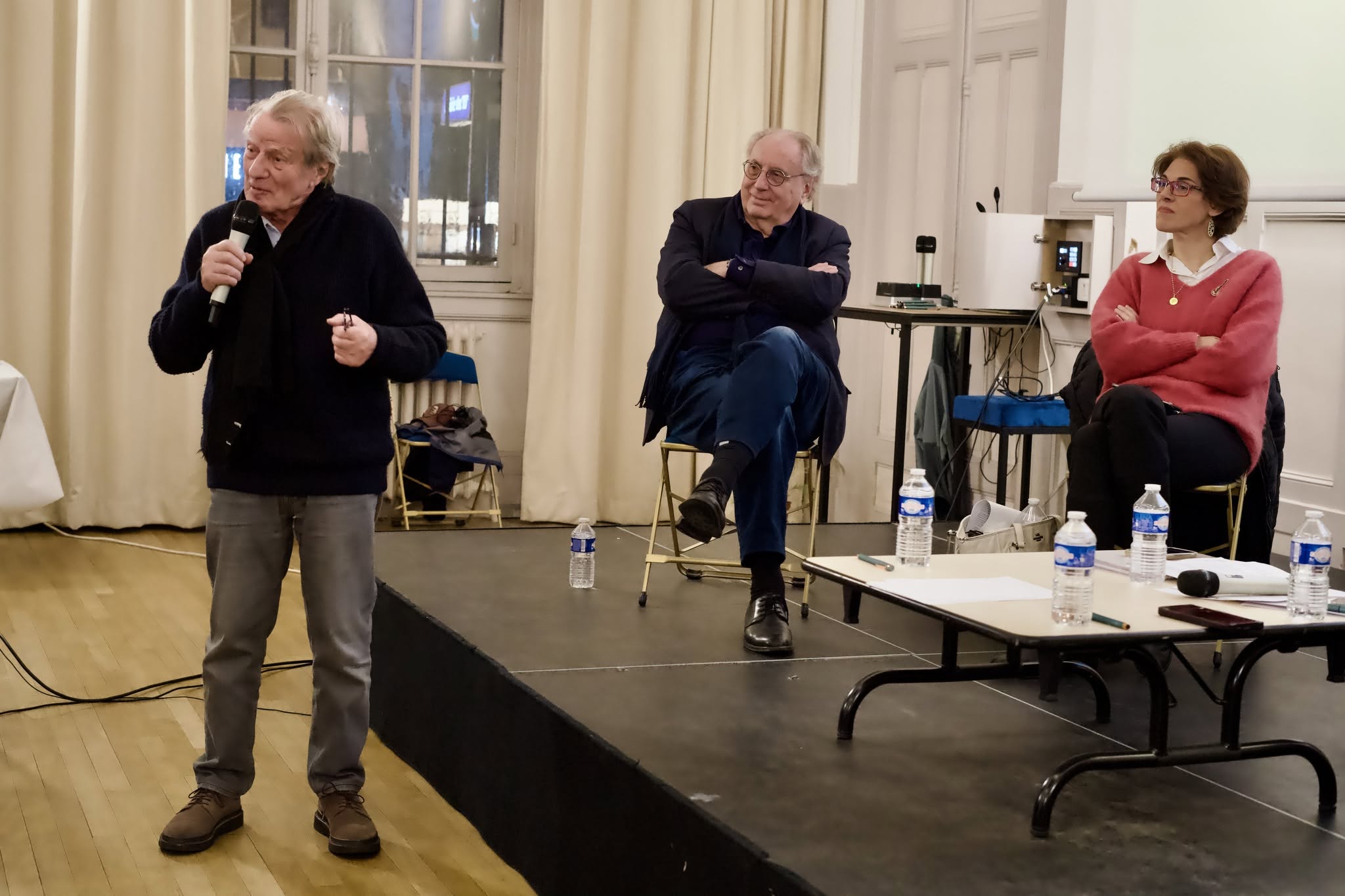
Bernard Kouchner recalled working alongside Kamel Mohanna in the field and spoke of the persistence with which Mohanna built Amel. He described how an organisation founded in Lebanon had come to inspire others working in solidarity. “Amel is what inspires us,” he said, thanking Dr Mohanna for his commitment.
Dr Mohanna called on partners in France and across Europe to sustain that solidarity beyond the emergency. He proposed partnerships between French local authorities and Lebanese municipalities to restore essential services, and collaborations between universities, professional associations and local teams to study the effects of displacement on health and education. He also highlighted how young people and diaspora communities can build lasting ties across the Mediterranean.
The people and organisations behind the discussion
Cosette Ibrahim moderated the roundtable. The speakers were Dr Kamel Mohanna, President of Amel Association International, Dima de Clerck, associate researcher at the French Institute for the Near East (Ifpo), Joseph Matta, President and founder of Salam LADC, Dr Maria Magdalena El Khazen, clinical psychologist and founder of Al Najat Village, and Professor Jean-Paul Chagnollaud, honorary president of the Institute for Research and Studies on the Mediterranean and Middle East (iReMMO).
Saïd Abboudi and Dania Fakredin-Viatte spoke on behalf of Voix Libanaises en France (VLF). Photojournalist Alizée Lambin presented her photography exhibition, which extended the discussion through images documenting everyday life in Lebanon.
Amel Association International thanks ASODH and Amel France for organising the event, Fondation Donnadieu and Réseau Euromed France (REF) for their support and participation, and the town hall of Paris’s 15th arrondissement for hosting the discussion. Amel also thanks the speakers, associations, international solidarity practitioners and members of the public who took part.

 Creative Commons Attribution 4.0 International license


