



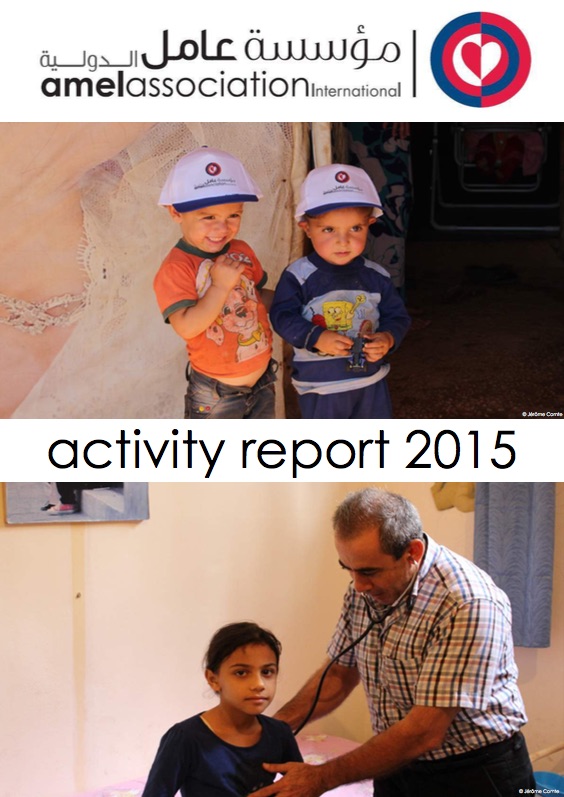
Delivering Hope, Healthcare and Humanitarian Action Across Lebanon
Throughout 2015, Amel Association International strengthened its commitment to supporting Lebanon’s most vulnerable communities by expanding access to healthcare, education, livelihoods, human rights and protection services.
Established in 1979, Amel is a non-governmental, non-sectarian Lebanese organization working to promote social justice and equal access to rights for all. Through a nationwide network of 24 centers and six Mobile Medical Units, the organization continued responding to the growing humanitarian needs created by the Syrian crisis while serving vulnerable Lebanese communities.
Healthcare at the Heart of Amel’s Mission
For more than four decades, healthcare has remained the cornerstone of Amel’s work.
In 2015, the organization operated 13 Primary Healthcare Centers across Lebanon, providing comprehensive medical services that included:
- General and specialist consultations
- Laboratory testing
- Medication distribution
- Health awareness sessions
- Referral to specialized care
The centers served both Syrian refugees and vulnerable Lebanese populations, reinforcing social cohesion through equitable access to healthcare.
During the year, Amel delivered more than 250,000 medical consultations, averaging between 1,000 and 1,500 consultations per center each month.
The organization also implemented specialized programmes addressing chronic diseases and supporting populations at higher health risk through screening campaigns, treatment and preventive awareness activities.
Mobile Medical Units Reaching the Most Remote Communities
Recognizing that many vulnerable families lived far from healthcare facilities, Amel continued operating six Mobile Medical Units across the Bekaa Valley and South Lebanon.
The mobile clinics provided:
- Primary healthcare consultations
- Disease surveillance and prevention
- Health education
- Social counselling
- Essential medical assistance in informal settlements and remote municipalities
In 2015, the mobile clinics reached more than 100,000 beneficiaries.
Approximately 39% of all consultations were delivered through Mobile Medical Units, while 61% were provided through Primary Healthcare Centers, highlighting the complementary role of both service models.
Education and Child Protection
Amel considers education a fundamental right and an essential element of children’s resilience during times of crisis.
Through its programmes in Haret Hreik and other locations, the organization provided:
- After-school educational support
- Recreational activities
- Learning-through-play initiatives
- Psychosocial support
- Parenting-skills sessions
- Hygiene and baby-kit distribution
- Social counselling
These programmes primarily targeted vulnerable children between the ages of 7 and 17, while also supporting parents and caregivers to strengthen family resilience.
Livelihood Programmes for Refugees and Host Communities
Believing that dignity begins with opportunity, Amel implemented livelihood initiatives aimed at empowering both refugees and Lebanese host communities.
Working alongside the Ministry of Social Affairs, United Nations agencies and international donors, the organization delivered vocational training and skills-development programmes designed to improve employability and foster self-reliance.
Guided by the motto “Positive Thinking & Permanent Optimism,” these programmes sought to transform humanitarian assistance into sustainable development opportunities.
Women’s Empowerment and Rural Development
Women’s economic independence remained a central pillar of Amel’s development strategy.
During 2015, the organization expanded initiatives that enabled women to generate income through:
- Handmade crafts
- Organic soap production
- Food processing
- Handicrafts
- Recycling
- Catering services
Among the flagship initiatives was the launch of the MENNA Handmade Products shop, providing women entrepreneurs with a permanent showroom and marketplace.
Amel also established the Menna Catering Group, creating additional employment opportunities through the preparation of food for events and social occasions.
These initiatives complemented the long-standing Mann Hiya project, which supports women’s empowerment through artisanal production and rural development.
Investing in Youth Leadership
Amel continued strengthening youth participation by creating opportunities for leadership, intercultural dialogue and civic engagement.
Activities focused on:
- Leadership development
- Peacebuilding
- Human rights
- Equality and non-discrimination
- Community engagement
- Cross-cultural exchange
One of the year’s highlights was a regional workshop that brought together young people from Lebanon, Syria, Palestine and Iraq, promoting dialogue on peace, equality and human rights.
Participants also launched the “Equality and Peace” blog to share their experiences and perspectives on protecting human rights across the region.
International exchange programmes were implemented in partnership with universities and institutions in Finland, France, Bulgaria, Portugal, Australia, Egypt and Tunisia.
Amel House of Human Rights
The Amel House of Human Rights (AHHR), established in partnership with La Sagesse University, continued developing specialized education and training programmes on human rights and international humanitarian law.
Its flagship activities included:
- The annual Summer School on the Law of Armed Conflict
- Video Advocacy Action Training for young activists
- Human rights education
- Courses on Palestinian rights
AHHR continued positioning itself as an academic and regional reference centre for human rights education in Lebanon and the Arab world.
Protecting Migrant Domestic Workers
Amel strengthened its programme supporting Migrant Domestic Workers (MDWs) and survivors of human trafficking through a comprehensive rights-based approach.
Programme activities included:
- Advocacy
- Legal and social services
- Awareness campaigns
- Group therapy
- Empowerment initiatives
- Protection and case support
Working with partner organizations across Jordan, Egypt, Italy and Cyprus, Amel expanded regional cooperation to improve the protection of migrant domestic workers from abuse and exploitation.
The programme had already supported thousands of beneficiaries from Ethiopia, Bangladesh, Nepal and Sri Lanka.
Expanding International Humanitarian Engagement
Amel reinforced its international presence throughout 2015.
The organization expanded advocacy efforts through its Geneva office while registering Amel France in Grenoble to strengthen partnerships and humanitarian cooperation across Europe.
Amel also actively contributed to preparations for the World Humanitarian Summit, advocating for stronger recognition of locally led humanitarian action.
Its representatives participated in numerous international conferences, including:
- Kuwait Donor Conference
- ICVA meetings
- Humanitarian Accountability Partnership (HAP) conferences
- UNHCR consultations
These engagements reflected Amel’s commitment to promoting citizen-driven humanitarian action founded on social justice and equitable partnerships between local and international actors.
Building Resilience Through Humanitarian Action
The 2015 Activity Report illustrates Amel Association International’s holistic approach to humanitarian response—combining emergency healthcare, education, livelihoods, women’s empowerment, youth engagement, human rights and protection into an integrated model of community resilience.
By responding to immediate humanitarian needs while investing in long-term development, Amel continued advancing its vision of a more inclusive, equitable and resilient Lebanon for all.

 Creative Commons Attribution 4.0 International license

